There is a particular kind of frustration that does not show up in government press releases. It lives in the market stall, in the kitchen, and in the quiet calculation a mother makes every morning before she decides what her family will eat. Nigeria has been living inside that frustration for the better part of two years now, and the people carrying the heaviest weight are not policymakers reviewing quarterly economic data. They are the civil servant in Ibadan counting the days to payday with an empty wallet, the roadside mechanic in Kaduna whose customers can no longer afford repairs, and the trader in Onitsha who watches her margins disappear every week without understanding exactly why. This is the human face of inflation in Nigeria, and it deserves a serious, honest conversation.
How It All Started
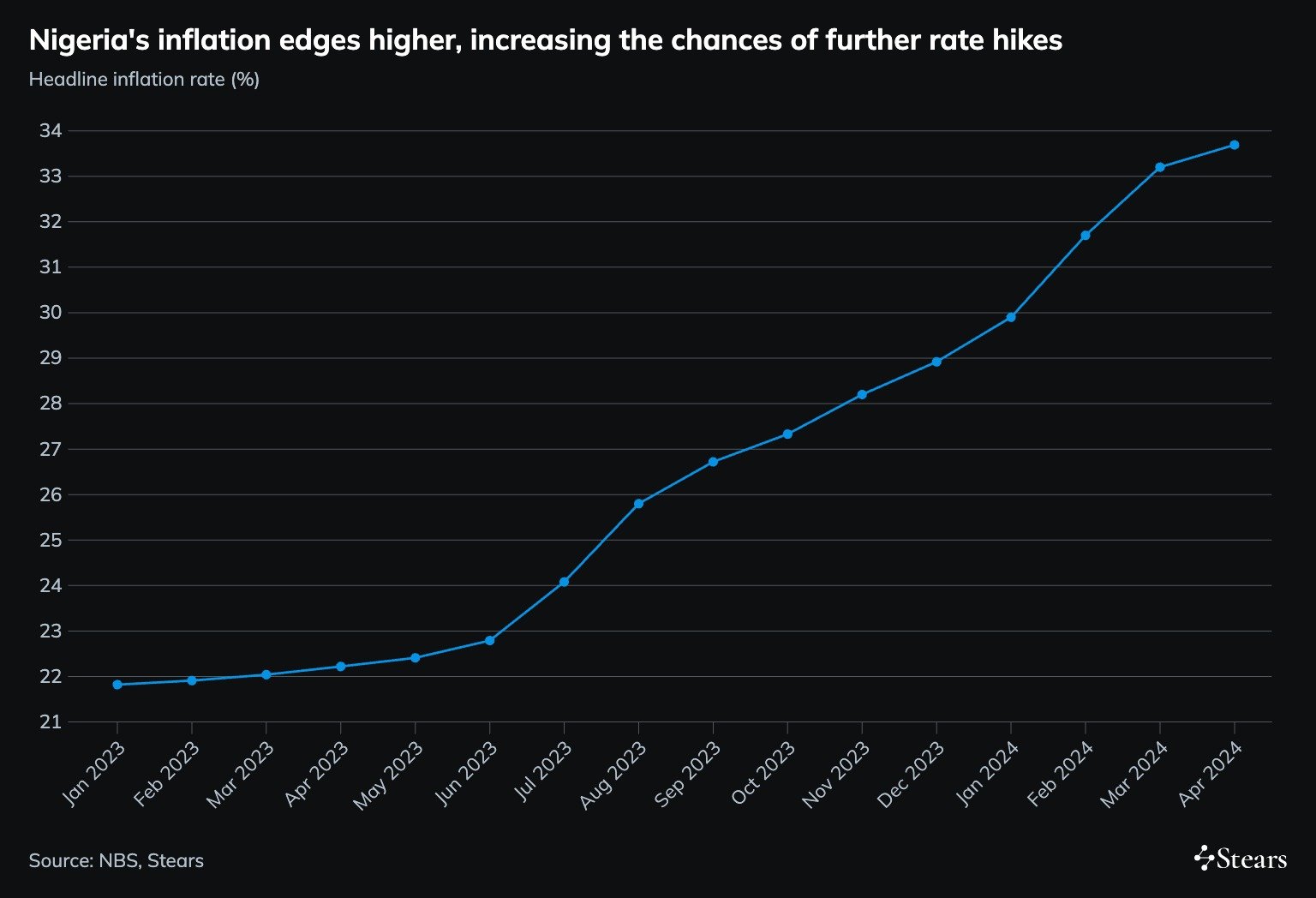
To understand why inflation continues to hit ordinary Nigerians so disproportionately, one must first look at what happened in a compressed period of time. In January 2024, Nigeria's headline inflation rate stood at 29.90 percent, already elevated and already painful. By June 2024, it had surged to 34.19 percent, the highest recorded in nearly three decades, with food inflation alone reaching 40.9 percent, according to the National Bureau of Statistics.
The inflection point that set all of this in motion was the removal of the fuel subsidy in June 2023, a policy decision that sent shockwaves through every layer of the Nigerian economy. The naira depreciated over 90 percent year on year, dramatically reducing household purchasing power and making food access increasingly difficult for poorer households. Petrol prices, which had been artificially suppressed for decades, surged from below 200 naira per litre to well above 1,000 naira.
That single shift changed the cost structure of everything. In Nigeria, fuel is not simply what goes into cars. It powers generators that keep businesses running, moves goods from farms to markets, and determines the price of virtually every item on every shelf across the country. When fuel prices triple, the entire economy reprices, and the people least equipped to absorb that repricing are the ones who feel it the most.
What the Numbers Look Like on the Ground
Statistics carry more meaning when they are translated into what people actually buy. According to a combined analysis from the World Food Programme and the National Bureau of Statistics, the price of beans in October 2024 was 282 percent above the same period in 2023. The price of local rice rose 153 percent over the same comparison period. A loaf of bread that cost 500 naira in 2022 rose to 1,500 naira by 2024.
By late 2024, tracking research showed that two out of every three Nigerian households struggled to afford sufficient food. These are not households in extreme destitution by any simplified international benchmark. These are working families, people who show up to jobs, run small enterprises, and try to participate productively in the formal economy, who are nonetheless unable to consistently feed themselves and their children. That reality does not appear neatly in any CPI report. It lives in the bodies of children who are not getting enough to eat and in the silent exhaustion of parents who are doing everything right and still running short.
Food insecurity during this period reached alarming proportions. Between October and December 2024 alone, an estimated 25.1 million Nigerians were experiencing acute food insecurity even at the peak of the harvest season. The World Food Programme and the government's Cadre Harmonise analysis projected that figure would rise to 33.1 million people during the lean season of 2025. To place that in perspective, that is a number larger than the entire population of many African countries.
The Wage Gap Problem
What makes Nigeria's inflation especially punishing for working people is the wide and persistent gap between wages and prices. In July 2024, the federal government raised the national minimum wage to 70,000 naira per month, an adjustment long overdue from the previous 30,000 naira floor. Labour unions had entered negotiations demanding 494,000 naira, reduced their position to 250,000 naira, and ultimately settled for 70,000 naira under political pressure.
With headline inflation running above 33 percent and the naira's ongoing depreciation, 70,000 naira translated to approximately 50 US dollars per month, barely sufficient in many rural communities and functionally inadequate for anyone raising a family in an urban centre. By late 2024, with food inflation at 40 percent, the majority of households earning the inflation-adjusted minimum wage were spending over 60 percent of their income on food alone, leaving less than 20,000 naira for rent, transportation, school fees, healthcare, and every other cost of living.
The wage increase, in short, was a political gesture dressed as an economic remedy. It acknowledged the collapse of purchasing power without actually restoring it. Workers accepted it not because it was sufficient, but because it was all that was on offer.
The Statistics Debate: What the Numbers Actually Say
In January 2025, the National Bureau of Statistics rebased the Consumer Price Index, shifting the base year from 2009 to 2024 to better reflect how Nigerian households actually spend their money. The immediate statistical result was striking. Nigeria's reported headline inflation rate dropped from 34.80 percent in December 2024 to 24.48 percent in January 2025, a sharp apparent decline that many Nigerians found deeply confusing given that market prices had not noticeably fallen.
The explanation lies in methodology, not reality. The rebasing changed the weights assigned to different goods in the inflation basket. The weight given to food, for example, was reduced from 51.8 percent to 40.1 percent, reflecting shifts in how the NBS defines average household spending. While this adjustment provides a statistically more accurate measurement tool, it did not make rice cheaper. It did not reduce transportation costs. Prices of essential goods and services remained high, wages continued to lag behind them, and the economic hardship many Nigerians had experienced throughout 2024 persisted into 2025 regardless of what a rebased CPI figure showed.
By November 2025, the headline inflation rate had moderated to 14.45 percent, the mildest since October 2020, marking the eighth consecutive month of easing. By January 2026, the rate stood at 15.10 percent, with food inflation falling dramatically to 8.89 percent, the lowest level in over a decade. These are genuinely meaningful improvements, and they deserve acknowledgment.
Signs of Relief, and Why They Do Not Tell the Whole Story
The descent in food inflation from nearly 41 percent at its peak to single digits by early 2026 is a remarkable statistical movement. Analysts at the Centre for the Promotion of Private Enterprise described the shift as real disinflation rather than temporary price volatility, and credited it to naira stabilisation, improved harvests, and the broader effect of monetary tightening. The trajectory is encouraging.
But several important caveats are worth stating plainly. A drop in the rate of price increases does not mean prices have returned to where they were. Beans still costs more than it did in 2022. Rice still costs more. Transportation still costs more. A family that was pushed out of adequate nutrition during the worst of the crisis does not automatically return to it when food inflation falls, because the wages that were eroded during that crisis have not been restored.
There is also a new complication emerging from the very success of import-driven food deflation. The Emir of Kano, Muhammadu Sanusi II, recently appealed to the federal government to halt food importation, warning that farmers are spending heavily on production but cannot recover their costs because locally grown food cannot compete with cheaper imports. Data from the NBS confirmed that Nigeria spent 5.27 trillion naira on food and beverage imports in the first nine months of 2025. The result is a genuine paradox: food prices are falling for consumers, but farmers are losing income, and the agricultural base that Nigeria needs for long-term food security is being quietly undermined in the process.
What Drives the Persistence of Inflation
Several structural factors make Nigeria especially vulnerable to inflation, and they are not resolved by monetary policy alone.
Currency dependence on imports: Nigeria imports a significant share of its food and nearly all manufactured goods. When the naira weakens, the cost of everything imported rises automatically, and that cost passes directly to consumers.
Energy costs embedded in everything: Without a stable power grid, Nigerian businesses run on generators. Generator costs are built into the price of every service and product, meaning energy inflation is not a separate category but an invisible tax woven into every transaction.
Agricultural supply disruptions: Armed banditry in the northwest and farmer-herder conflicts across the north-central zone have displaced farming communities and reduced crop yields. Floods in October 2024 alone submerged approximately 1.6 million hectares of farmland and are estimated to have caused potential cereal crop losses of 1.1 million tonnes, enough to feed 13 million people for a year.
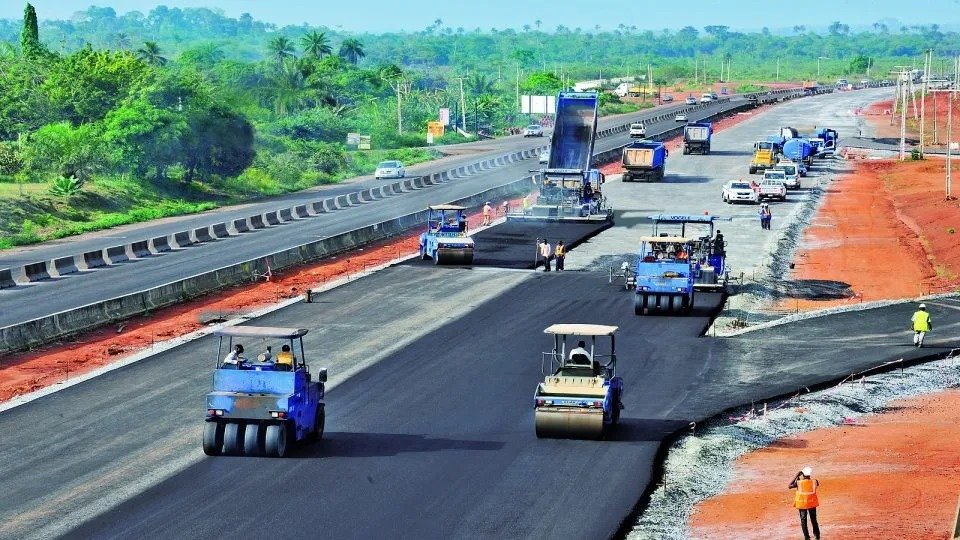
Logistics costs on degraded roads: Moving food from where it is grown to where people live costs more in Nigeria than in comparable economies because road infrastructure is inadequate. That additional logistics cost is passed entirely to the consumer.
Weak social protection: When inflation runs ahead of wages for extended periods and the safety net beneath vulnerable households has gaps, the people who fall do not recover quickly.
The Path Forward
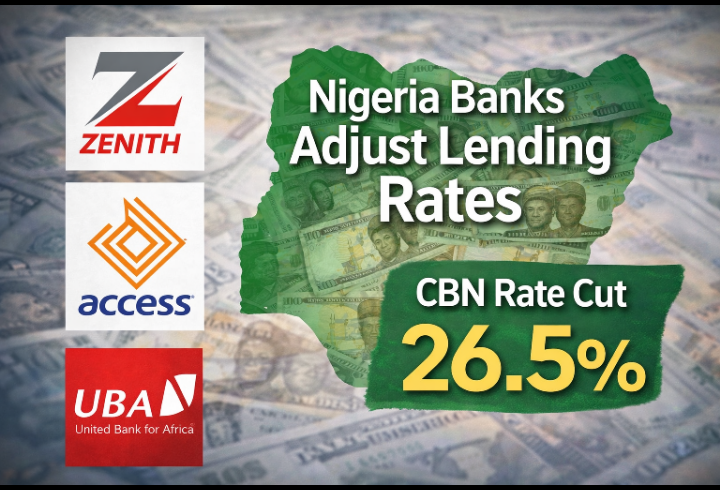
The Central Bank of Nigeria has adopted an inflation-targeting framework with a stated goal of bringing inflation to 13 percent. Monetary tightening through aggressive interest rate increases throughout 2024 contributed to the naira's partial stabilisation and the subsequent easing of import costs. These are credible policy moves, and they are showing measurable results.
PricewaterhouseCoopers, in its January 2025 Nigeria Budget and Economic Outlook, warned that inflation combined with inadequate social protection could push up to 13 million Nigerians into poverty in 2025 alone. That warning was not issued to be alarmist. It was issued to direct attention toward the fact that macroeconomic stabilisation, on its own, is not the same thing as economic recovery for ordinary people. Recovery requires wages that genuinely reflect the cost of living. It requires agricultural investment that builds domestic food supply rather than substituting it with imports. It requires infrastructure that brings logistics costs down so that farmers and consumers are not both paying a premium for the distance between them. And it requires social protection systems that catch people when economic shocks push them beyond their capacity to cope, systems that the government has attempted to build through programmes like the Renewed Hope Conditional Cash Transfer, but which have faced persistent implementation challenges including corruption allegations and bureaucratic delays.
Nigeria's inflation story in 2025 is, in a limited but real sense, improving. The numbers are moving in the right direction. But the nurse in Port Harcourt whose patients cannot afford medication, the smallholder farmer in Kano who grew food that now sells below the cost of production, and the single mother in Lagos who reduced her family's meals from three to two during the worst of the crisis, they are not waiting for macroeconomic indicators to validate their recovery. They are waiting for wages that restore their dignity, for food that is affordable not because it was imported but because it was grown, and for an economy that grows in their direction, not just upward on a chart.

Comments (0)