
Table of Contents
Trending Now
How Deep the Hole Actually Is
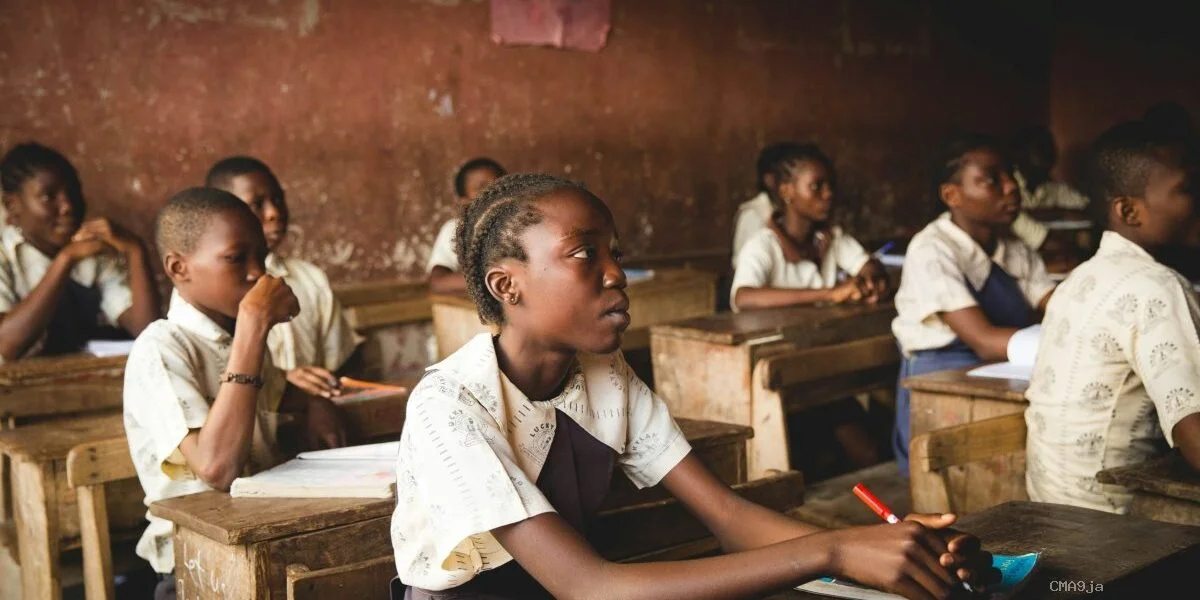
The numbers from official sources are striking enough on their own. The Universal Basic Education Commission reports that just 915,913 teachers are responsible for 31,771,916 pupils in public and private primary schools across Nigeria, putting the teacher-pupil ratio at 1:35, well beyond UNESCO’s recommended standard of 1:25.
That gap isn’t closing. National Bureau of Statistics data show that the number of registered primary school teachers grew from only 1.41 million in 2020 to 1.47 million in 2022, a mere 4.3 percent increase over three years. UBEC figures for 2025 then show a sharp decline back to 915,593, suggesting that attrition is now outpacing any recruitment gains.
The Executive Secretary of the National Commission for Colleges of Education disclosed that Nigeria currently faces a deficit of nearly 200,000 teachers at the basic education level, a gap widening partly because some Colleges of Education have recorded zero first-year admissions, signalling a structural collapse in the pipeline of future educators.
Perhaps the most damning single data point in all of this: a Punch investigation found that eighteen states failed to recruit a single teacher for five consecutive years between 2019 and 2024. Not slowed down recruitment. Not reduced it. Stopped it entirely, for half a decade, while classrooms kept filling up with children.
Against this backdrop, Nigeria counted an estimated 18.3 million out-of-school children in 2024, representing one in five of all out-of-school youth globally. The teacher shortage and the out-of-school crisis are not parallel problems. They are the same problem.
The Real Reasons Teachers Are Leaving, and Not Coming Back
Education analyst Aminu Bala put it plainly: “The teacher shortage in Nigeria is not due to a lack of graduates. It is due to poor conditions, lack of career growth, and failure to recruit and retain talent.”
That diagnosis is worth sitting with, because it shifts the frame entirely. This is not primarily a supply problem. Nigeria produces enough graduates who could become teachers. The problem is that the profession actively drives people away from it, and then fails to hold on to the ones who enter.
Low salaries and limited welfare packages are among the major drivers of attrition. Some states have reported attrition rates as high as 20 percent between 2022 and 2024. International recruitment has accelerated the drain further, with the United Kingdom and Canada alone hiring substantial numbers of qualified Nigerian educators.
The international dimension deserves more scrutiny than it typically gets. Since February 2023, teachers certified by the Teachers Registration Council of Nigeria have been exempted from sitting qualifying courses in England and awarded Qualified Teaching Status directly, meaning a Nigerian teaching licence is now formally equivalent to England’s, and thousands of qualified teachers have a straightforward pathway out. The TRCN’s own registrar acknowledged that enquiries from Canada, the United States, and other countries were arriving daily. That these teachers are good enough for London classrooms but choose to leave Nigerian ones tells you everything about the conditions they’re leaving behind.
Underpaid teachers burn out fast. Many take on side jobs, skip training, or mentally check out long before they formally quit. Add to that the problem of salary arrears, teachers in some states going months without pay, and a policy environment where Nigeria’s education allocation fell to just 5.47 percent of the national budget in 2024, far below the UNESCO benchmark of 15 to 20 percent, and you have a system that is structurally designed to fail.
Federal policy decisions have compounded the supply problem further. The conversion of teacher training colleges into universities disrupted the pipeline of trained educators, removing the institutions specifically designed to produce classroom-ready teachers at scale.
What Reforms Have Actually Worked, At Home and Abroad
The crisis is real and documented. But it is not without solution. Several states and countries have demonstrated what deliberate policy can achieve, and the evidence points consistently in the same direction.
Enugu and Anambra: The Exception That Proves the Rule
Governor Peter Mbah of Enugu allocated 33 percent of the 2025 state budget to education, a figure not seen in Nigeria since the Western Region’s golden years under Obafemi Awolowo in the 1950s. Anambra under Governor Charles Soludo recruited 5,000 teachers on merit and has brought over 8,000 educators into the system across just three years. Both states are outliers in a national landscape defined by inaction, but they demonstrate what is possible when there is genuine political will behind education spending.
Mexico’s Performance-Based Incentive Model
Mexico’s Carrera Magisterial programme awards between 25 and 200 percent of annual salary based on performance-linked criteria and has benefited over 600,000 teachers, demonstrating that financial incentives tied to outcomes can meaningfully improve both recruitment and quality. A scaled version of this model, adapted to Nigeria’s federal structure, could address both the attraction problem and the quality problem simultaneously.
China’s Rural Housing Incentives
China has successfully used housing incentives to strengthen rural teacher supply, a direct-response model that Nigeria’s Athena Centre for Policy and Leadership has recommended be adopted through targeted rural deployment packages including housing and hardship allowances. Given that Nigeria’s shortage is most acute in rural and underserved communities, an incentive structure that specifically rewards rural posting rather than treating all placements as equivalent could redirect teacher supply to where it is most critically needed.
Rwanda’s Post-Conflict Teacher Surge
Rwanda’s post-conflict teacher recruitment drive, which dramatically boosted enrolment across the country, has been cited as a model for how rapid, coordinated state action can shift a teacher shortage in a short timeframe. Rwanda’s approach combined central government coordination with clear targets, transparent processes, and meaningful incentives. Nigeria could replicate the architecture, even if the context differs.
The Reforms Nigeria Actually Needs
There is no shortage of policy recommendations floating around in reports and ministerial speeches. What has been missing is the combination of specificity, funding, and follow-through that turns recommendations into reality. Based on the available evidence, these are the interventions with the strongest case behind them.
Pay Teachers What the Law Already Requires
Before any new policy initiative is announced, the basic obligation that already exists must be honoured. A three-month teachers’ strike in the Federal Capital Territory that ended in July 2025 exposed the structural fragility of the system. What began as a dispute over unpaid minimum wage arrears revealed deeper systemic weaknesses across the entire sector. You cannot attract people to a profession, or retain those already in it, while the government defaults on the salaries it has already legally committed to paying.
A national salary and incentive framework that ensures competitive pay and timely allowance disbursement is the foundation from which everything else must be built. Without it, no other reform lands meaningfully.
Rebuild the Teacher Training Pipeline
Education stakeholders at a national conference in Abuja stressed the need to reposition teacher education through reforms that include digital literacy, innovation, and entrepreneurship training, with the Minister of State for Education emphasising that equipping future teachers with practical skills is essential for improving learning outcomes. Reversing the damage done by converting teacher training colleges, rebuilding Colleges of Education that have reached zero first-year admissions, and making teacher education genuinely modern and career-relevant are essential structural fixes that operate on a longer timeline but cannot be deferred.
End the Five-Year Recruitment Freezes
Eighteen states not recruiting a single teacher for five years is not a budget crisis. It is a governance failure. States need to be held to minimum annual recruitment targets tied to federal UBE grant disbursements. No recruitment, no funding. That kind of conditionality already exists in principle within the UBEC framework and simply needs to be enforced with the same seriousness as the obligation it is supposed to address.
Rural Incentive Packages That Actually Move People
The shortage is disproportionately severe in rural communities, conflict-affected areas in the north-east and north-west, and states with historically low education budgets. A flat national approach to teacher deployment doesn’t solve a geographically concentrated problem. Hardship allowances, housing support, school fee waivers for teachers’ children, and accelerated promotion tracks for educators who serve in underserved postings are all evidence-backed tools that other countries have used successfully and that Nigeria has the policy architecture to implement.
Invest in Professional Development and Make It Mandatory
One of the persistent drivers of attrition in teaching globally is the sense that the profession offers no growth, that you enter as a teacher and leave, years later, still doing exactly the same job in exactly the same way. Expanding professional development and structured mentorship for early-career teachers, coupled with a dedicated national teacher taskforce to monitor recruitment, welfare, and classroom outcomes, would create both practical improvement in teaching quality and a psychological shift in how the profession is experienced from the inside.
Change How Teaching Is Talked About
This one sounds soft. It isn’t. In societies where teaching carries genuine social prestige, like Finland or Singapore, the profession attracts strong candidates and retains them at high rates. In societies where it is treated as a fallback option for those who couldn’t find anything better, the pipeline dries up. The Athena Centre has recommended a nationwide communication campaign positioning teaching as a prestigious and impactful career, using radio, television, digital media, and campus outreach to shift the social narrative. Government alone can’t change cultural perception, but it can stop treating teachers as afterthoughts in its own public communications, and it can start with the basic dignity of paying them on time.
The Stakes if Nothing Changes
Nigeria faces a projected shortage of about 1.4 million teachers by 2030. That projection is not alarmist speculation. It is arithmetic applied to current attrition rates, current recruitment rates, and a student population that keeps growing faster than the educator workforce that is supposed to serve it.
When teachers are underpaid and the system is underfunded, the gap between urban and rural education widens. Urban children get technology and better-resourced classrooms. Rural children get chalk, or no teacher at all. Two parallel education systems emerge, one for the privileged and one for everyone else. That divide, compounded over years, produces exactly the kind of inequality that stifles economic development and social stability.
The teacher shortage in Nigeria is not a problem that will resolve itself. It is the accumulated result of decades of underfunding, broken recruitment cycles, inadequate pay, and the gradual erosion of a profession that the country absolutely cannot afford to lose.
Enugu and Anambra have shown that different choices are possible. Rwanda and Mexico have shown that deliberate reform produces measurable results. The evidence exists. The policy options are documented. What remains, as it so often does in Nigeria’s education story, is the question of whether the political will exists to act on any of it before the next generation of children arrives in classrooms that still don’t have enough teachers standing in them.
You May Also Like


Be the first to comment
Leave a Comment
No comments yet
Be the first to share your thoughts!